 English
 العربية

The Impact of Weather on Cladding and Glass Facades and How to Protect Them
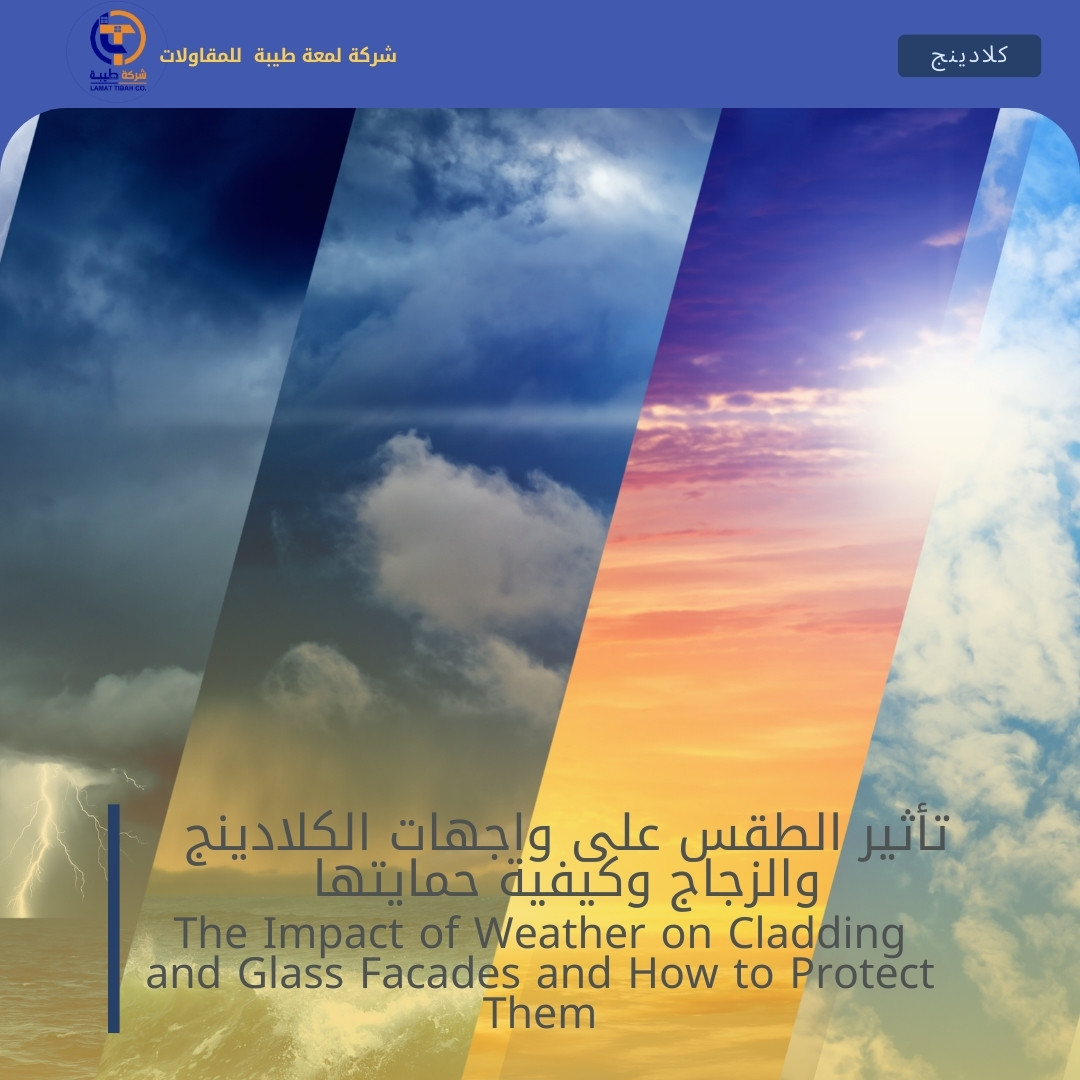
Building facades are among the most critical elements that define a property's overall appearance, reflecting its construction quality and resilience to various environmental factors. Cladding and glass are among the most commonly used materials in modern facade finishes due to their numerous advantages, such as aesthetics, thermal insulation, and weather resistance. However, continuous exposure to different weather conditions can affect their durability and performance over time.
This article explores the impact of different climatic factors on cladding and glass facades and outlines effective ways to protect and maintain them.
First: The Effect of Weather Conditions on Cladding and Glass Facades
1. Heat and Sunlight
Heat and direct sunlight are among the most influential factors on cladding and glass, especially in hot regions such as the Gulf countries. The effects include:
- Expansion and contraction of materials: Continuous exposure to heat causes cladding and glass to expand, and when temperatures drop, they contract. Over time, this can lead to small cracks in the materials.
- UV radiation impact: Ultraviolet rays can cause cladding colors to fade and reduce glass transparency, affecting the facade's aesthetics.
- Increased indoor temperature: Poor thermal insulation can lead to higher indoor temperatures, impacting occupant comfort and increasing energy consumption for cooling.
2. Humidity and Rain
Humidity and rain affect building facades in various ways, including:
- Metal corrosion: Some types of cladding contain metal components that may rust over time if continuously exposed to moisture.
- Water leakage: If the joints between cladding panels or glass are not sealed properly, water may seep inside, damaging the internal structure or causing mold growth.
- Stains and scaling: Water containing salts and minerals can leave stains on glass and cladding, necessitating regular cleaning and maintenance.
3. Wind and Storms
Winds play a crucial role in impacting building facades, particularly in areas prone to sandstorms or strong gusts. The main effects include:
- Surface erosion: Wind carrying dust and sand can erode the outer layer of cladding, reducing its lifespan.
- Structural pressure: Strong storms may exert unbalanced pressure on glass, potentially causing cracks or even breakage if the glass is not reinforced.
4. Low Temperatures and Frost
In colder regions, temperature drops can cause problems such as:
- Thermal contraction: Decreased temperatures cause cladding and glass to contract, which may lead to cracks or separation of some parts from the main structure.
- Water freezing: If water seeps into the joints, it may freeze when temperatures drop, expanding in volume and causing parts of the facade to detach.
5. Environmental Pollution and Chemical Contaminants
In industrial cities, building facades may be exposed to high levels of pollution, leading to issues such as:
- Accumulation of dirt and pollutants: Pollution from vehicle emissions and factories leads to the buildup of dust and dirt on facades, diminishing their aesthetic appeal.
- Chemical reactions: Some airborne chemicals may react with cladding coatings or outer layers, causing damage or color changes.
Second: How to Protect Cladding and Glass Facades from Weather Effects
1. Use of Weather-Resistant Materials
- Choose cladding panels with additional protective layers against UV rays to minimize sun damage and color fading.
- Use double-layered or heat-treated glass to enhance resistance to wind and thermal shocks.
- Apply waterproof and heat-resistant coatings to cladding to protect against corrosion and fading.
2. Enhancing Thermal and Waterproof Insulation
- Install thermal insulation layers behind cladding panels to prevent indoor heat buildup.
- Ensure tight sealing between panels to prevent water infiltration.
- Use sealing strips around glass frames to block moisture entry.
3. Regular Maintenance and Cleaning
- Periodically clean glass and cladding to remove dirt and pollutants that may degrade their quality.
- Conduct routine inspections to check for cracks or damage in joints and outer layers.
- Repaint cladding when necessary to maintain its appearance and protect it from deterioration.
4. Shading and Additional Protection Techniques
- Install shading systems or canopies over glass facades to reduce heat absorption and UV exposure.
- Apply protective films on glass to prevent breakage due to strong winds or unexpected impacts.
5. Use of Strong, Wind-Resistant Mounting Systems
- Employ advanced mounting systems that ensure the stability of glass and cladding panels even in extreme weather conditions.
- Ensure that supporting structures are made from rust-resistant and corrosion-proof materials for durability and sustainability.
Conclusion
Cladding and glass facades are exposed to various climatic factors that may impact their quality and performance over time. By selecting suitable materials, applying insulation and protection strategies, and adhering to regular maintenance, facade longevity and aesthetics can be improved.
Investing in protection and maintenance technologies not only enhances a building's value but also reduces future repair costs.
If you need high-quality cladding and structural glass installation or maintenance services, Lama Tayba Contracting offers the best solutions, following the highest quality and safety standards. Contact us today for more details about our exceptional services!
Add New Comment